Precision at the Atomic Scale
Think about the scale of what we’re trying to do when we edit human genes. Inside each of our 37 trillion cells sits a nucleus packed with about 3.2 billion base pairs of DNA, wound so tightly that your entire genome fits in a space one ten-millionth the size of a pinhead. Now picture deploying molecular scissors that can cut at exactly the right spots in this microscopic world. That’s CRISPR gene editing, and honestly, it makes my head spin when I think about how it works at a scale where our normal ideas about size and precision just fall apart.
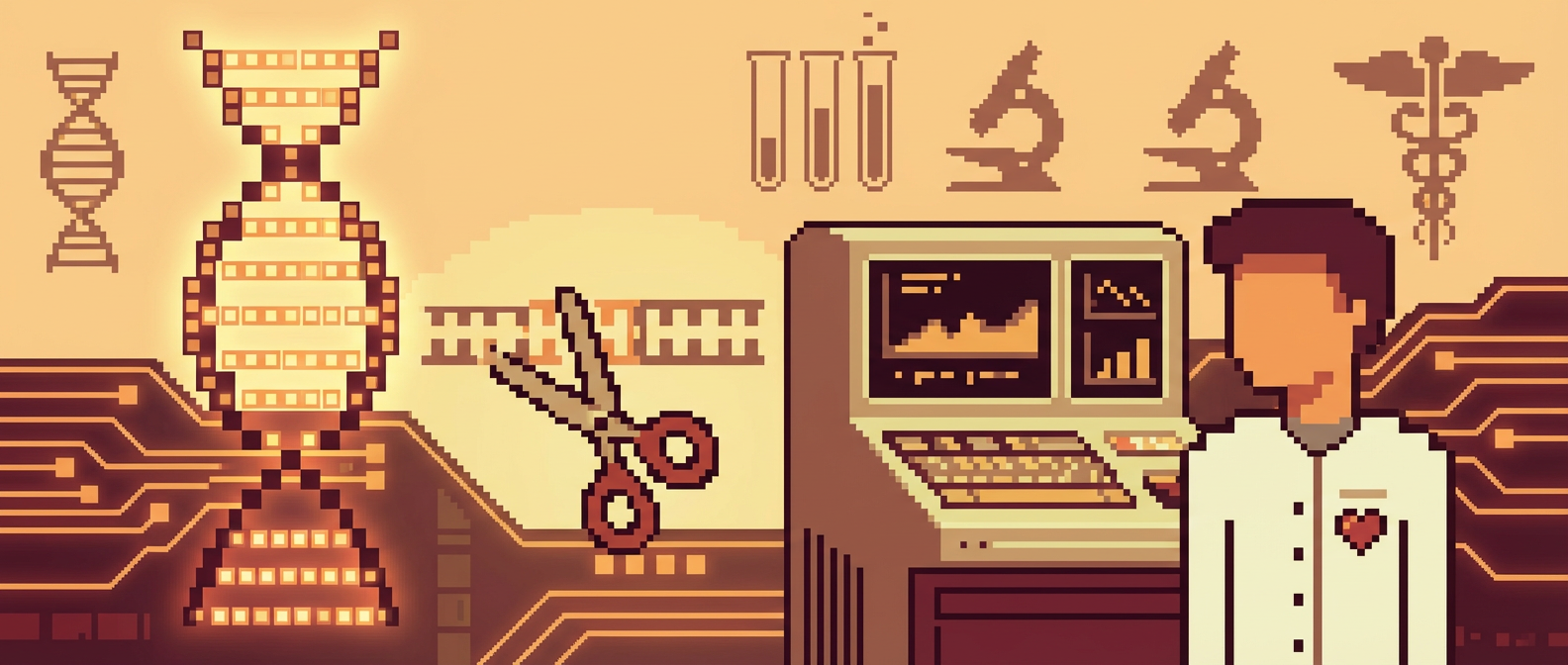
When the FDA approved the first CRISPR therapy for sickle cell disease in late 2023, it felt like we’d crossed some kind of threshold. This treatment edits genes in a patient’s bone marrow cells, basically reprogramming the tiny factories that make faulty hemoglobin. The scale difference here blows me away: we’re using tools that work at the nanometer level to tackle a disease affecting millions worldwide.
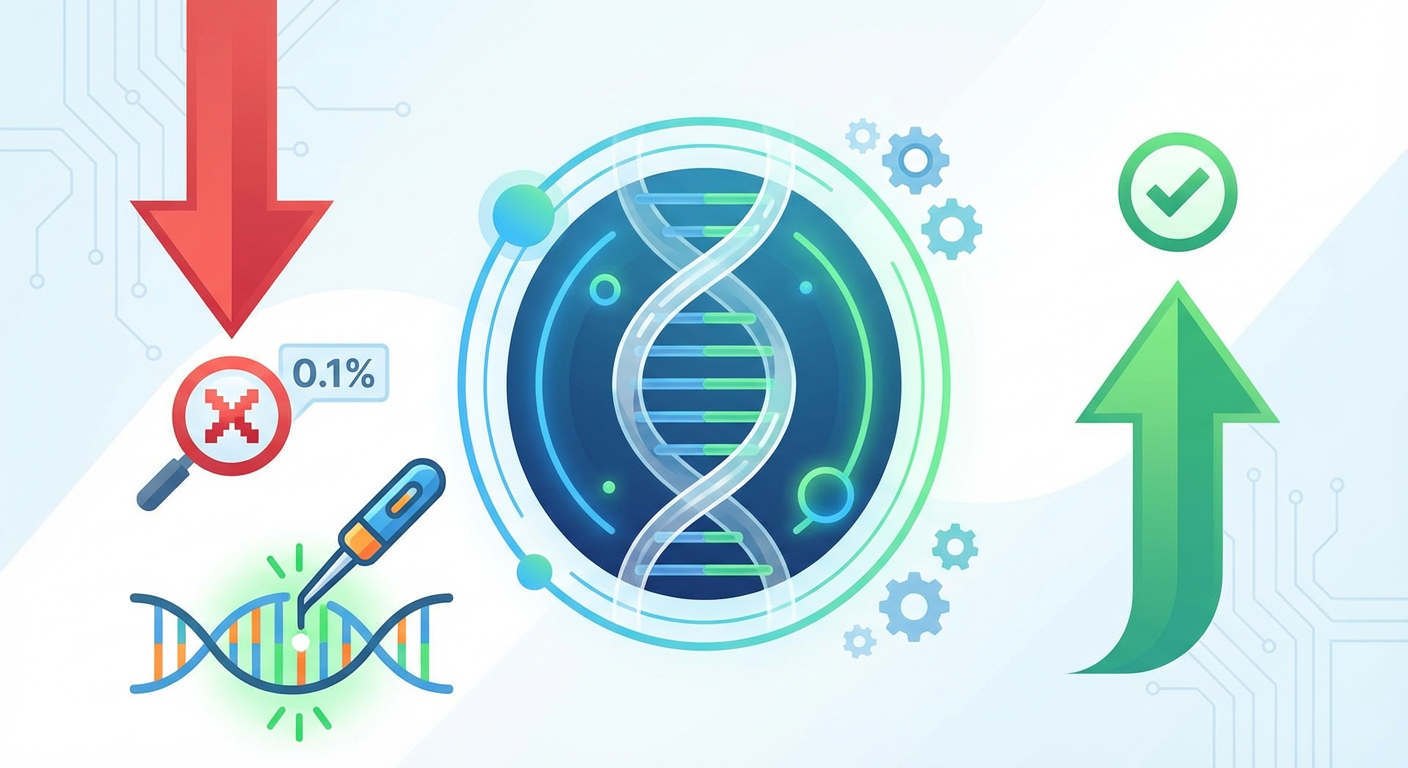
What really gets me isn’t just the precision, but how consistently we can maintain that precision across billions of cellular edits. Recent improvements in base editing have pushed off-target editing rates below one-tenth of one percent. That means fewer than one in a thousand molecular cuts happen in the wrong place. To put this in perspective, imagine a sniper hitting a marble-sized target from fifty miles away, and nailing it correctly 999 times out of every 1,000 shots.
From Laboratory Bench to Living Systems
Moving from editing genes in petri dishes to editing them inside living people? That’s a complexity jump that challenges everything we thought we knew about scale. In-vivo gene editing trials for transthyretin amyloidosis show CRISPR systems can be delivered straight into patients, where they travel through the bloodstream, find specific cells, get through cellular membranes, locate target DNA sequences, and make precise cuts without damaging surrounding genetic material.
This happens across multiple scales at once. On the big picture, we see clinical improvements in patients whose symptoms have gotten worse over years or decades. At the cellular level, we watch normal protein production come back in individual liver cells. At the molecular level, we document the exact removal or modification of disease-causing genetic sequences. The STAT News biotech coverage of these trials shows how researchers are learning to coordinate interventions that work across these different levels of biological organization.
What I find elegant about in-vivo editing is how it turns the patient’s own cells into therapeutic agents. Instead of introducing foreign substances that the immune system might attack, these approaches reprogram existing cellular machinery to work correctly. The scale implications are huge: one successful edit in a stem cell can generate millions of properly functioning daughter cells over the patient’s lifetime.
The Economics of Molecular Medicine
Want to see where questions of scale get really uncomfortable? Look at the economics of gene therapy. Current CRISPR treatments cost between one and three million dollars per patient. These price tags reflect the sophisticated technology involved, sure, but also the mind-boggling complexity of developing, testing, and manufacturing these interventions at a scale that ensures safety and effectiveness.
These costs reveal a fundamental problem with scaling molecular medicine. While CRISPR could theoretically treat thousands of genetic diseases, the economics of drug development create bottlenecks that limit who can access these treatments. The research infrastructure needed to bring a single gene therapy to market requires coordinating efforts across multiple scales: basic research labs investigating molecular mechanisms, clinical trial networks enrolling hundreds or thousands of patients, manufacturing facilities producing individualized treatments under strict quality controls.
The scale problem goes beyond individual treatments to entire healthcare systems. When a single therapy costs more than most people make in decades, how can societies sustainably integrate these interventions into existing medical frameworks? The Broad Institute CRISPR research initiatives increasingly focus on developing more efficient delivery methods and broader-spectrum approaches that could address multiple conditions at once, potentially improving cost-effectiveness through economies of scale.
Regulatory Landscapes and Ethical Boundaries
The regulatory frameworks governing gene editing show how different societies tackle the challenge of overseeing technologies that work at the molecular level but affect entire populations. The split between US and EU approaches to agricultural gene editing is a perfect example. Both regions deal with similar underlying technologies, but their regulatory responses reflect different philosophies about balancing innovation with caution at a societal scale.
These regulatory differences become especially tricky when considering germline editing, where modifications to reproductive cells can pass to future generations. The ethical controversy around the He Jiankui case, where a researcher claimed to have edited human embryo genes, shows how individual actions at the molecular scale can ripple through global scientific communities and influence international policy discussions for years or decades.
The ethical considerations for germline editing are unlike anything in human history. Unlike other medical treatments that affect only the treated person, germline modifications could influence every subsequent generation in a family line. This time scale amplifies every decision, turning what might seem like straightforward medical treatments into interventions with species-level implications.
Navigating Infinite Possibility
The real marvel of CRISPR isn’t any single application, but how it shows us that interventions at the tiniest scales can cascade upward to transform lives, families, and potentially entire populations. We’re standing at this remarkable intersection of molecular precision and human-scale impact, equipped with tools whose full potential we’ve barely begun to explore. The challenge ahead isn’t just perfecting these technologies, but learning to use them wisely across all the scales where their effects will be felt.