Racing Toward the Future of Thought
In a laboratory somewhere in California, a person sits quietly, their thoughts flowing directly into a computer screen. No keyboards, no voice commands, just the pure intention to move a cursor translating into digital action. This isn’t science fiction anymore. Neuralink’s first human trial participant has successfully demonstrated the ability to control a computer interface using nothing but neural signals. It’s a genuine breakthrough in the relationship between human consciousness and digital technology.
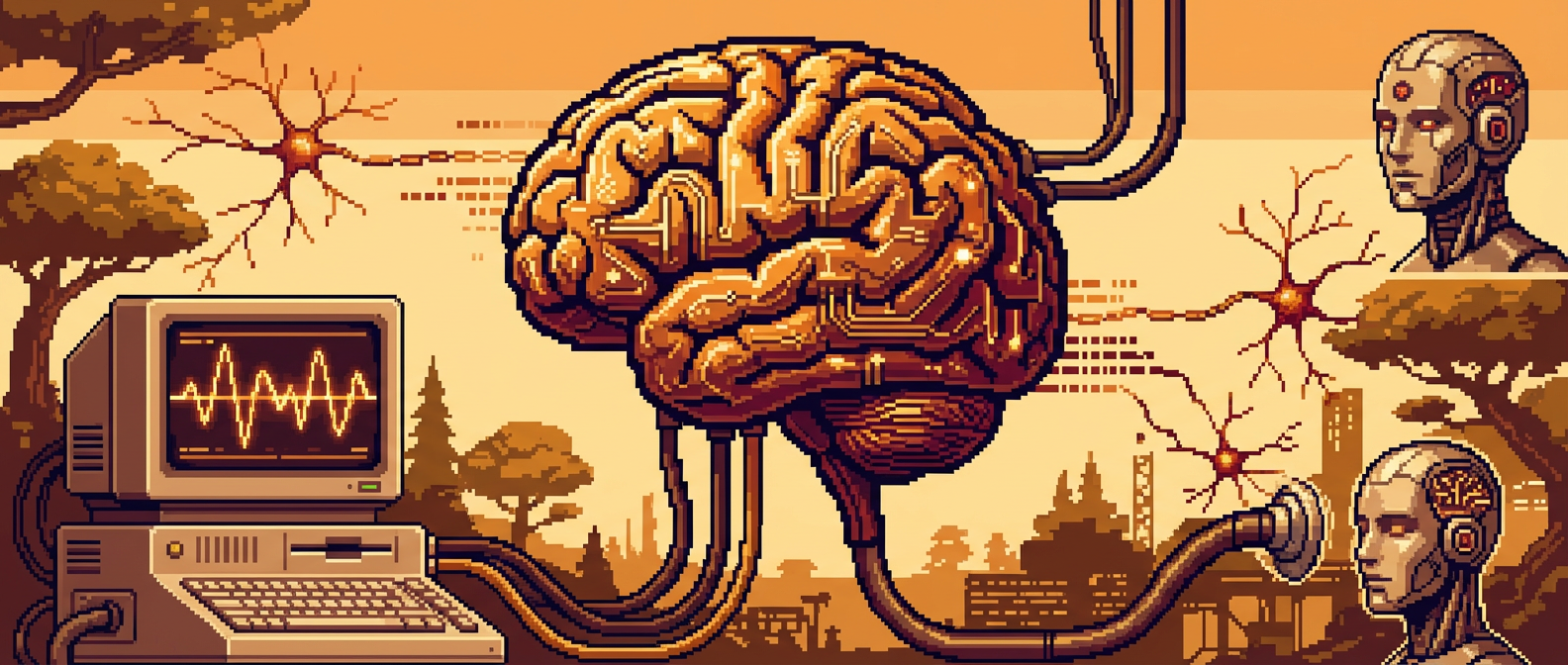
But this achievement is just one chapter in a much bigger story playing out across neuroscience labs, medical centers, and tech companies worldwide. Brain-computer interfaces have quietly evolved from theoretical concepts into working prototypes that are beginning to restore lost capabilities and boost human potential in ways that seemed impossible just a decade ago.
The field covers a remarkable range of approaches, from surgical implants that read individual neurons to external headsets that detect brain waves through the skull. What connects these diverse technologies is a shared goal: create direct communication pathways between the biological networks of the brain and the silicon networks of our digital world.
The Race for Neural Real Estate
While Neuralink grabs headlines with its high-profile demonstrations, the company wasn’t actually first to achieve human brain implantation. Synchron, a competitor with a completely different approach, hit this milestone eighteen months earlier using a stent-based design that can be inserted through blood vessels rather than requiring open brain surgery. Their device threads through the jugular vein and into brain blood vessels, where it expands like a tiny mesh scaffold to record neural activity.
This alternative pathway shows how the field is exploring multiple routes to the same destination. Where Neuralink’s approach involves placing ultra-thin electrodes directly onto brain tissue, Synchron’s method uses the brain’s existing vascular architecture. Both strategies have their advantages: direct contact potentially offers higher signal quality, while vascular placement reduces surgical risk and complexity.
The competition between these approaches reflects deeper questions about how invasive brain-computer interfaces should be. Each design choice involves tradeoffs between performance, safety, and accessibility that will ultimately determine which technologies reach widespread clinical use.
Beyond the Skull: Consumer-Grade Neural Interfaces
Not all brain-computer interfaces require surgical intervention. A growing ecosystem of non-invasive devices is bringing neural control to consumer applications, particularly in gaming and entertainment. These external headsets, some with thirty-two or more recording channels, can detect electrical signals from the brain through the skull and translate them into commands for computers and gaming systems.
While the signals captured through non-invasive methods are weaker and less precise than those recorded directly from brain tissue, advances in signal processing and machine learning are steadily improving their capabilities. Modern consumer brain-computer interfaces can distinguish between different mental states, detect attention levels, and even respond to imagined movements.
These consumer applications work as important testing grounds for brain-computer interface technology, building user familiarity and driving down costs through volume manufacturing. They also provide valuable data about how people naturally interact with neural interfaces, insights that inform the development of medical devices.
Restoration and Enhancement of Human Capabilities
The most immediate and compelling applications for brain-computer interfaces lie in medical restoration, particularly for individuals who have lost the ability to speak or move due to injury or disease. Recent breakthroughs in neural decoding have enabled paralyzed patients to communicate through thought alone, with some systems achieving communication speeds of eighty words per minute by translating imagined speech patterns into text.
Memory enhancement represents another frontier where brain-computer interfaces are showing remarkable promise. Clinical trials of memory prosthetics have demonstrated the ability to improve recall performance by thirty percent in human participants. These devices work by recording neural patterns associated with successful memory formation, then playing back those patterns to strengthen memory consolidation.
The implications extend far beyond treating medical conditions. As published research in the Nature Neuroscience journal continues to reveal new insights about brain function, the potential for cognitive enhancement in healthy individuals becomes increasingly plausible. The boundary between medical treatment and human augmentation may prove more fluid than we currently imagine.
Navigating Regulatory Complexity
The rapid pace of technological development has outpaced regulatory frameworks designed for traditional medical devices. Brain-computer interfaces present unique challenges that existing approval pathways struggle to handle. The FDA’s current device categories weren’t designed for technologies that can both read from and write to the nervous system, creating uncertainty about appropriate safety standards and testing requirements.
Similar challenges exist under European Union Medical Device Regulation frameworks, where the classification of brain-computer interfaces remains unclear. Some aspects of these devices resemble software, others function like implantable medical devices, and still others could be considered consumer electronics depending on their application.
This regulatory uncertainty creates real consequences for innovation and patient access. Companies must navigate unclear approval pathways, potentially slowing development and increasing costs. Meanwhile, patients who could benefit from these technologies may face longer wait times for access to life-changing treatments.
The regulatory environment is evolving as agencies work to develop new frameworks that can accommodate the unique characteristics of brain-computer interfaces. Industry publications like IEEE Spectrum brain-computer interfaces regularly cover these developments, highlighting both progress and ongoing challenges in creating appropriate oversight for these emerging technologies.
The Human Element in Technological Revolution
Behind every breakthrough in brain-computer interface technology are researchers, clinicians, and patients who have dedicated years to pushing the boundaries of what’s possible. The field attracts scientists from diverse backgrounds including neuroscience, engineering, computer science, and medicine, creating a uniquely interdisciplinary community united by shared fascination with the brain.
Patient participants in clinical trials represent perhaps the most important element in this scientific ecosystem. Their willingness to undergo experimental procedures, often while dealing with severe medical conditions, provides the essential human data that transforms laboratory discoveries into clinical realities. Their experiences and feedback shape not just device performance but also our understanding of how humans want to interact with neural technology.
The pace of progress in brain-computer interfaces continues to accelerate, driven by advances in materials science, machine learning, and our fundamental understanding of neural computation. As these technologies mature, they promise to reshape not just how we treat neurological conditions, but how we think about the relationship between mind and machine. The conversation about these developments goes far beyond technical specifications to cover profound questions about human identity, capability, and the future we want to build together.