When Silicon Dreams of Synapses
At 2:47 AM last Tuesday, I found myself hunched over my laptop, scrolling through a paper from Intel’s neuromorphic research team. The coffee had gone cold hours ago, but I couldn’t look away from the performance metrics of their Loihi 2 chip. Here was a processor that didn’t just compute, it learned, adapted, and processed information in ways that completely challenged everything we thought we knew about digital architecture. The numbers were staggering: thousand-fold improvements in energy efficiency for certain tasks, real-time adaptation without retraining, and processing speeds that made traditional AI accelerators look sluggish.
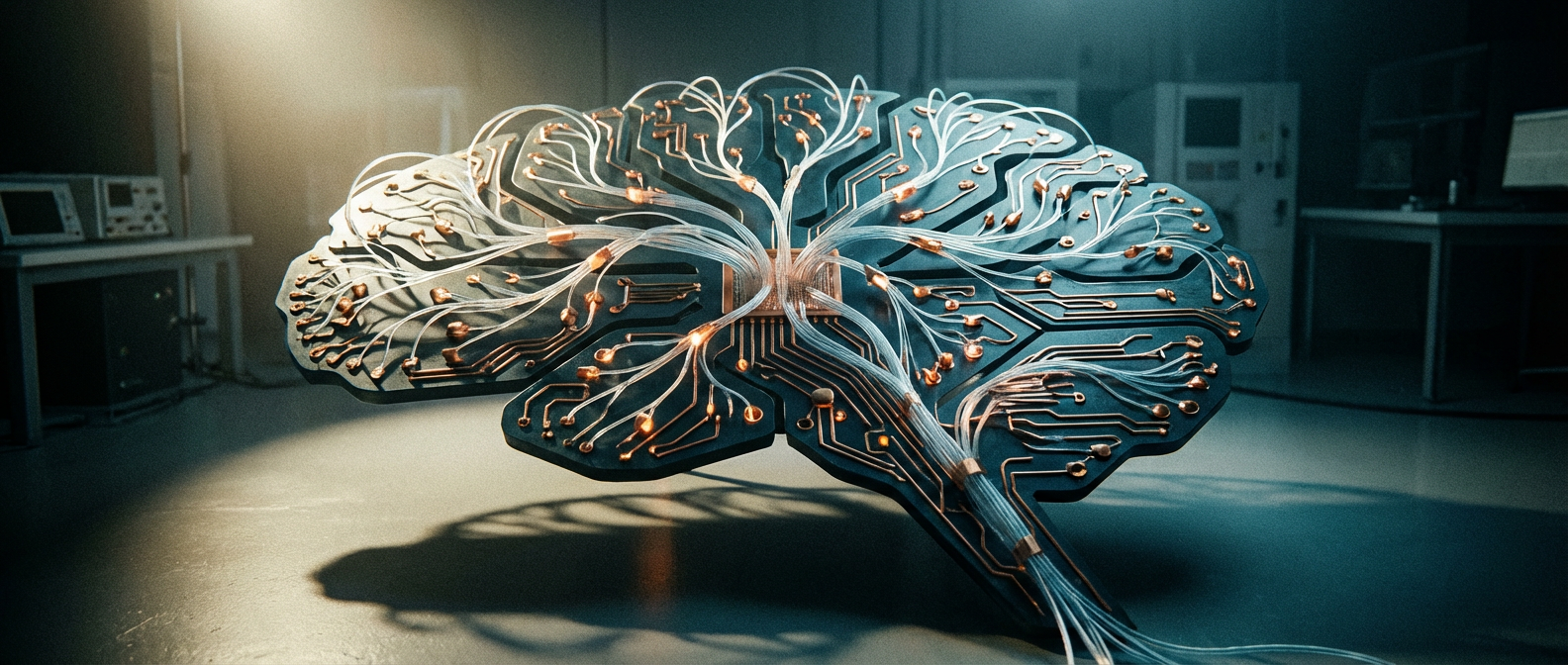
Neuromorphic computing is one of the most radical departures from conventional digital processing since the invention of the transistor. Unlike traditional computers that shuttle data back and forth between separate memory and processing units (the infamous von Neumann bottleneck), neuromorphic chips integrate memory and computation directly into their basic building blocks. These aren’t just faster processors. They’re completely different machines that blur the line between hardware and software, between computation and memory, between programming and learning.
The field has reached an interesting inflection point. What began as academic speculation about brain-inspired computing has evolved into a sophisticated engineering discipline with working prototypes, commercial applications, and billion-dollar investments from tech giants. Yet for all the progress, neuromorphic computing remains refreshingly uncertain, a field where the biggest breakthroughs often come from researchers willing to abandon decades of computing orthodoxy and start fresh with biological inspiration.

The Architecture of Adaptation
Traditional digital processors operate through discrete time steps, processing information in rigid, sequential cycles. Neuromorphic architectures abandon this clockwork precision for something far more organic: event-driven processing that responds to stimuli as they arrive, much like biological neurons fire only when they receive sufficient input. This shift from synchronous to asynchronous processing eliminates enormous amounts of wasted energy, energy that conventional processors burn even when they’re basically idle, waiting for the next clock tick.
The hardware itself reflects this biological inspiration. Neuromorphic chips use specialized circuits called silicon neurons and synapses that can store, process, and adapt their responses based on experience. These aren’t digital simulations running on conventional processors. They’re analog or mixed-signal circuits whose physical properties change over time, creating a form of hardware-based learning that happens at the speed of electrons rather than the speed of software.
Perhaps most remarkably, these architectures support what researchers call “plasticity,” the ability to rewire themselves based on patterns in the data they process. IBM’s TrueNorth chip, with its 1 million neurons and 256 million synapses, can learn to recognize patterns without any traditional programming. Instead, it develops new connections and strengthens existing ones through exposure to training data, creating computational pathways that emerge organically from the data itself.
This adaptability extends beyond simple pattern recognition. Neuromorphic systems excel at handling noisy, incomplete, or constantly changing inputs, exactly the kind of messy real-world data that often overwhelms traditional AI systems. They can process visual information from event cameras that capture changes rather than frames, respond to sparse sensor networks that only transmit when something interesting happens, and adapt their behavior in real-time without requiring complete retraining.
The Human Architecture Behind the Silicon
The most compelling aspect of neuromorphic computing isn’t the technology itself, it’s the community of researchers who are building it. These are scientists and engineers who’ve chosen to work at the intersection of neuroscience, computer science, and electrical engineering, fields that traditionally operate in separate academic silos. The conversations at neuromorphic computing conferences feel different from typical tech gatherings. You’ll overhear discussions about spike timing-dependent plasticity alongside debates about manufacturing yield rates, or find roboticists collaborating with computational neuroscientists on navigation algorithms.
This interdisciplinary approach has created a research culture that values biological insight as much as engineering optimization. Kwabena Boahen at Stanford speaks passionately about how understanding retinal processing led to breakthroughs in event-driven vision systems. Carver Mead, often considered the father of neuromorphic engineering, built his career on the radical proposition that silicon could capture not just the function but the basic operating principles of biological neural networks.
The field has also benefited from an unusual degree of openness and collaboration. Unlike many areas of cutting-edge technology development, neuromorphic research often involves sharing detailed architectures, benchmarking results, and even hardware designs. The International Conference on Neuromorphic Systems has become a forum where academic researchers, startup founders, and engineers from major corporations freely exchange ideas about everything from novel memory technologies to bio-inspired learning algorithms.
From Laboratory Curiosities to Real-World Applications
The transition from research prototype to commercial application has been neither smooth nor predictable. Early neuromorphic systems struggled with limited programming tools, unconventional architectures that required complete software rewrites, and performance advantages that only appeared for very specific tasks. Many promising research directions hit dead ends when they encountered the practical realities of manufacturing, cost, and integration with existing systems.
However, recent developments suggest the field may finally be finding its commercial footing. Intel’s Loihi chips are being deployed in robotics applications where real-time learning and adaptation provide clear advantages over traditional processors. BrainChip’s Akida processor targets edge AI applications where power efficiency matters more than raw computational throughput. These systems aren’t trying to replace conventional processors. Instead, they’re carving out niches where their unique capabilities provide compelling benefits.
The most promising applications often involve scenarios where traditional computing approaches hit basic limitations. Autonomous drones that need to navigate complex environments with minimal power consumption. Smart sensors that must process data locally without constant communication with cloud servers. Prosthetic devices that adapt to their users’ neural signals over time. These applications play to neuromorphic computing’s strengths: low power consumption, real-time adaptation, and robust performance with noisy inputs.
The Uncertain Future of Biological Computing
As I write this, neuromorphic computing sits at a crossroads between revolutionary potential and practical uncertainty. The basic advantages are becoming clearer, dramatic improvements in energy efficiency for certain tasks, learning capabilities that emerge from hardware rather than software, and processing architectures that handle real-world complexity with remarkable grace. Yet significant challenges remain: limited software ecosystems, manufacturing complexities that drive up costs, and the ongoing challenge of identifying applications where neuromorphic approaches provide clear advantages over rapidly improving conventional AI accelerators.
The field’s future likely depends on continued collaboration between neuroscientists uncovering new insights about biological computation and engineers finding ways to implement those insights in practical hardware. Recent breakthroughs in understanding how biological neural networks process temporal information, adapt to new environments, and achieve remarkable energy efficiency continue to inspire new architectural approaches. Meanwhile, advances in materials science and manufacturing are making it possible to build neuromorphic circuits with unprecedented scale and precision.
What excites me most about neuromorphic computing isn’t any single breakthrough, but the cumulative effect of researchers who are willing to completely rethink how we process information. Whether you’re interested in the biological inspiration, the engineering challenges, or the potential applications, this field offers endless opportunities to explore questions that sit at the intersection of brain science and technology. The research papers keep coming, the prototype demonstrations continue to surprise, and somewhere in a laboratory tonight, someone is probably discovering something entirely unexpected about the relationship between neurons and silicon.