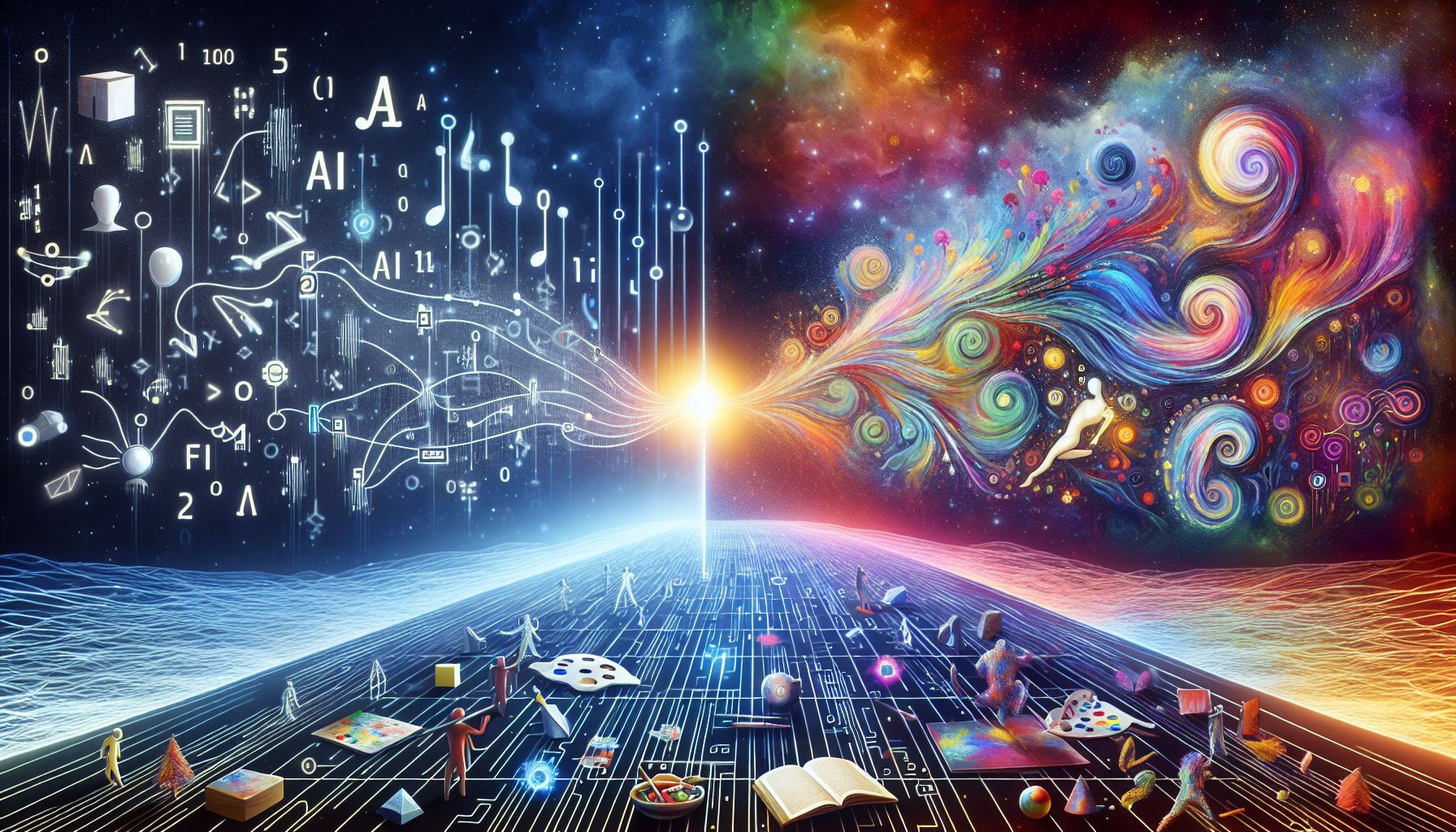
Hey tech enthusiasts! I hope you’re as ready as I am to talk about a topic that’s absolutely wild. Today, we’re talking about Artificial Intelligence in creative arts. Yep, you heard me right. I’m talking about machines that not only think but can also help create, paint, compose, and design. And believe me, it’s not just about robots painting like Van Gogh or composing music in Beethoven’s style. We’re talking about a completely new way to approach creativity, one that’s opening doors we never even knew existed.
A Creative Revolution: AI Meets Art
Let’s kick things off by tackling the big question: What in the world is AI doing in the art world? Traditionally, art has been considered one of the most human of endeavors. It’s deeply personal, emotive, and subjective as hell. But thanks to incredible advances in AI, this narrative is changing fast. With algorithms learning styles, mimicking techniques, and even developing their own flair, they’re making us rethink what creative arts can actually be.
AI’s entry into this domain isn’t just about producing art. It’s about boosting the creative process for humans. Imagine having an AI buddy that can suggest a color palette, offer alternate chord progressions, or brainstorm narrative conflicts. It’s like having an infinitely patient collaborator who’s always ready to help turn your half-baked ideas into something amazing.
Behind the Canvas: How AI Creates Art
You might be wondering, how does AI actually do this stuff? Well, it’s a wild mix of data, algorithms, and a little bit of digital magic. At the heart of AI creativity lies machine learning, and in particular, a method called Generative Adversarial Networks (GANs). These are like a cat-and-mouse duo. One part generates images (or music, or stories), while the other critiques them, helping to refine the output until it’s, well, art.
Take, for example, the AI that helped create “The Next Rembrandt,” a project that analyzed 346 of Rembrandt’s paintings to generate a new, utterly authentic artwork. This isn’t just some clever data crunching. It’s machines learning aesthetic preferences, understanding historical styles, and engaging in a form of artistic thought. It’s mind-boggling, really.
The New Renaissance: AI as a Muse
Now, let’s get into why this matters. Sure, it’s cool that a robot can paint, but the implications go way beyond novel creations. AI is changing how art gets made, experienced, and understood. Think of AI not just as a tool for creating art, but as inspiration itself, a new kind of muse.
For artists, AI offers a ton of new possibilities. You can experiment with styles, patterns, and themes that were previously unimaginable. Musicians can generate endless melodies to choose from, while writers can co-create narratives with predictive text algorithms. This means richer, more diverse forms of expression and a broader reach for creative voices who might not have had the opportunity otherwise.
Artists and Algorithms: A Match Made in Tech Heaven?
Here’s where it gets a little contentious. Not everyone’s thrilled about machines infringing on the sacred space of human creativity. There’s a genuine fear that AI may devalue the artist’s touch. But here’s my take: AI isn’t trying to replace artists. It’s here to work with them, to push creative boundaries.
Artists have always been at the forefront of technology, whether it’s using new pigments, adopting photography, or incorporating digital media. AI is just the next step on this technological journey. It doesn’t replace the human flair. It amplifies it.
Challenges on the Creative Horizon
Before we get too starry-eyed, let’s pause and consider the challenges ahead. First, there’s the ethical mess. Who owns the artwork, a person or the algorithm? Is it even ethical to integrate AI so deeply into something so traditionally human? Then there’s the practical consideration of quality control and the risk of everything looking the same. Will all AI-created art start to feel cookie-cutter?
There’s also the issue of accessibility. Not every artist has access to cutting-edge technology. It’s often expensive and complex. Making AI tools available to everyone without losing artistic integrity could be a major hurdle to clear.
A Glimpse into the Future
Looking ahead, I see a world where AI continues to mature and deepen its collaboration with human artists. Imagine a museum where curated collections include extensive AI contributions alongside human masterworks. Maybe we’ll even have AI art curators, offering personalized tours based on real-time data about what sparks your creativity.
Speculating further, wouldn’t it be something if AI could eventually understand human emotions so deeply that it could create art that resonates with us on a purely emotional level? Now that would be an exciting, and slightly eerie, turn of events.
Conclusion: Embracing the Art of the Possible
In closing, AI in creative arts isn’t just a futuristic fantasy. It’s happening right now. And it’s not a threat, it’s a thrilling expansion of what we consider art and who can create it. Whether you’re an artist eager for new tools or just a curious techie like me, it’s hard not to be caught up in the possibilities.
So, let’s embrace this new wave of creativity, with all its quirks and questions. Whether AI-driven art hangs in fancy galleries or plays in your headphones as that new indie sound, one thing’s for sure: we’re just scratching the surface. The canvas is blank, and the potential is truly limitless. Now that’s art.