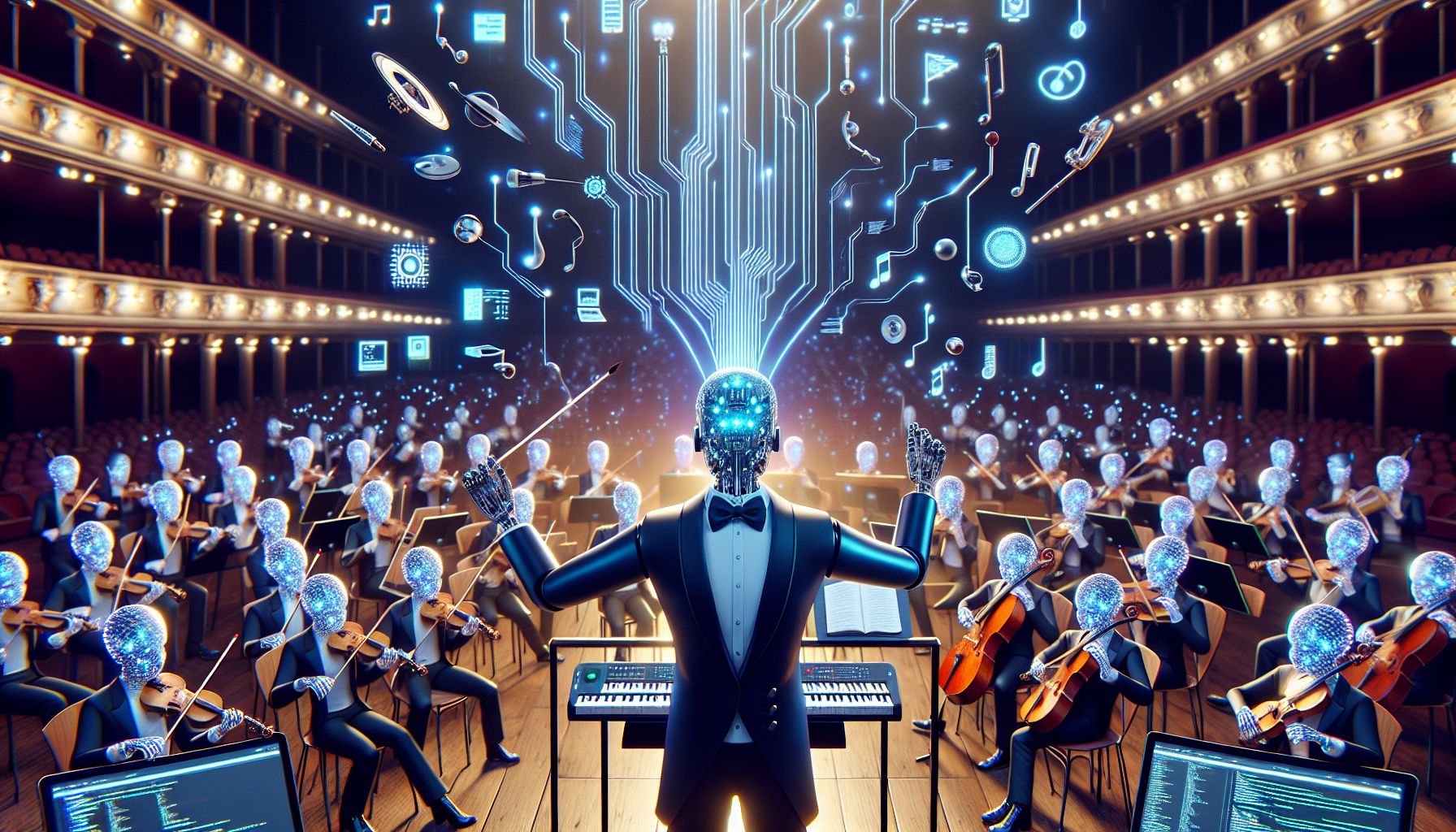
Welcome back, fellow tech enthusiasts! Today, I’m diving into a topic that has me absolutely buzzing with excitement and a tinge of disbelief (in the best possible way) — Artificial Intelligence in the creative arts. AI isn’t just about automating mundane tasks or powering self-driving cars anymore. We’re now stepping into an era where machines aren’t just mimicking human creativity; they’re actually contributing to it in ways that keep surprising me. Join me on this wild ride of turning ones and zeroes into goosebumps and genuine emotion!
The Birth of AI’s Artistic Expression
Imagine a world where an algorithm writes your favorite novel or composes a symphony that brings a tear to your eye. Well, guess what? That’s not science fiction anymore. In the last few years, AI has moved beyond being just a tool to become a collaborator in the creative processes that many of us (myself included) previously considered uniquely human territory.
AI-Powered Music Composers
Let’s start with music — the universal language. AI programs like OpenAI’s MuseNet and AIVA have been pushing boundaries here that honestly blow my mind. AIVA, for instance, has been crafting original scores that could easily be mistaken for something penned by a seasoned composer. I often joke that if AIVA claimed Beethoven as an ancestor, I’d believe it. The AI can analyze thousands of compositions across different genres and styles, synthesize that knowledge, and produce original pieces that defy my expectations every time.
But what does this mean for musicians? It’s a complete paradigm shift. Artists can collaborate with AI to generate fresh ideas, explore new genres, and even enhance their technical skills. Picture this: a budding musician teams up with an AI to produce a chart-topping hit. Who’s the artist? In my opinion, it’s a beautiful blend — a fusion of human intuition and machine precision that neither could achieve alone.
Writing the Future: AI and Literature
Now, let’s take a turn down the literary highway. AI-generated content has evolved dramatically from those awkwardly phrased sentences that reminded me of our earliest chatbot experiments. Today, we have AI penning short stories, crafting poetry, and even collaborating on full-blown novels. It’s poetry in motion, literally!
Here’s where I got caught completely off guard: AI models like OpenAI’s GPT-3 can write with a level of coherence and style that’s eerily human. The idea of an AI writing a bestseller might once have been laughable, but now it’s a serious consideration. Some purists worry about the potential devaluation of human creativity, but I see a world of opportunity where writers have co-pilots who can churn out plot twists or enrich dialogue with speed that frankly makes me a little jealous.
Painting by Numbers (and Algorithms)
Art lovers, don’t think for a second that AI is skipping your domain. Programs like DeepArt and Google’s DeepDream have completely changed digital artistry. AI can now generate pieces that evoke emotion, tell stories, and — in some cases — challenge our perception of what art can be.
Remember when AI art first surfaced, and we all squinted at those bizarrely psychedelic images, not quite sure what to make of them? Fast forward to today, and AI is being featured in galleries, blending styles from the likes of Van Gogh and Picasso into entirely new works. This isn’t just parlor trick stuff; it’s serious artistry. And it has me wondering: What’s next? There’s a whole new set of brushes on the artist’s palette, and honestly, some of them are digital.
The Ethical and Philosophical Canvas
Before we get carried away putting AI-generated roses on everything, I have to address the elephant (or is it a robot?) in the room. As AI technologies become central to creative domains, we’re facing new ethical and philosophical challenges that honestly keep me up at night sometimes.
The Question of Authorship
Who owns an AI’s creations? This question isn’t simply academic; it’s one that could completely redefine intellectual property laws. If an AI writes a hit song, who deserves the credit — the developer who created the AI, the user who set it in motion, or the AI itself? Should we start issuing copyright certificates to algorithms?
My best guess is that we’ll soon need to completely overhaul our legal frameworks to handle these scenarios. But as we journey down this road, we need to keep talking about ownership and recognition in this AI-enhanced world before the lawyers figure it out for us.
Ethical Creativity
With AI’s influence growing, what does this mean for cultural authenticity and reliability? If AI crafts content without cultural sensitivity, we could end up making art that misrepresents or completely ignores the contexts that humans hold dear. It’s a philosophical minefield that makes my head spin: How do we program empathy and cultural understanding into our algorithms? It’s a question I think all of us — coders, artists, audiences alike — will need to wrestle with sooner rather than later.
A Harmonious Future Awaits
As machines continue pushing their way into the concert halls, writer’s rooms, and art studios, I’m forced to completely rethink what creativity really means. Yet, rather than seeing AI as a threat to our creative kingdom, let’s embrace it as a new kind of ally. Think of AI as that quirky band member who takes your ensemble to places you never imagined going.
Looking into my crystal ball, I see a future where art crafted by both humans and machines builds bridges between cultures, generations, and disciplines. We can unlock new vistas of imagination when we accept AI not as a replacement, but as an innovation partner in our creative ventures.
So, here’s to the new maestros, virtuosos, and wordsmiths with silicon brains. We’re standing at the beginning of a new Renaissance — one marked by collaboration, exploration, and imagination that goes way beyond what I thought possible just five years ago. For all we know, the next great masterpiece is just a line of code away. Cheers to that!