The Problem We’ve Known Was Coming
For nearly a decade, CRISPR-Cas9 has been the gene-editing superstar. It’s elegant, it’s relatively easy to use, and it works remarkably well in a petri dish. But there’s been a persistent ghost in the machine: those double-strand breaks that CRISPR creates don’t always repair the way we want them to. When the cell’s machinery tries to stitch the DNA back together, it sometimes inserts or deletes a few nucleotides in the process. We call these mistakes indels, and they occur in somewhere between one and five percent of every edit CRISPR makes.
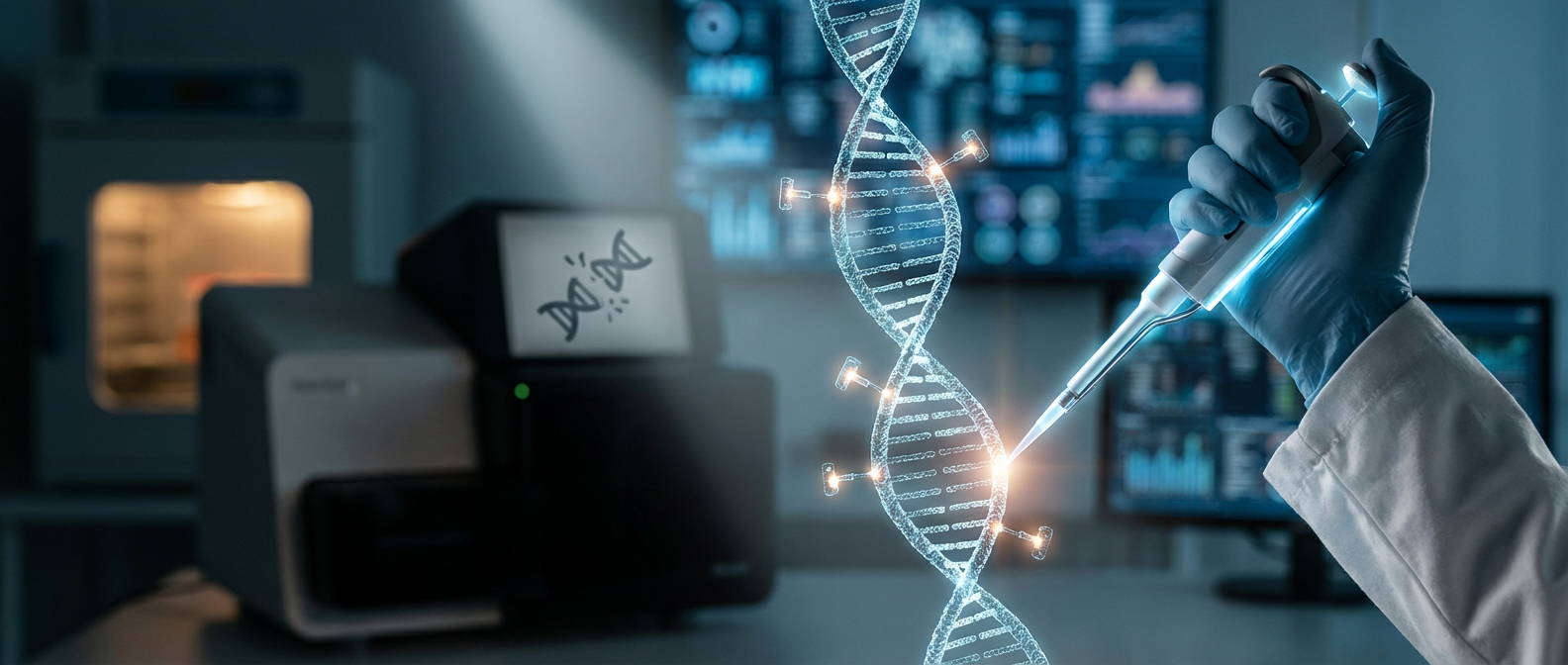
One to five percent might sound tolerable until you remember what we’re actually doing: we’re editing human cells that will live inside human bodies, potentially for decades. That small percentage compounds across billions of cells. Off-target cuts appear in the genome. Unintended edits create proteins that weren’t supposed to exist. In the context of treating disease, that margin of error transformed CRISPR from a revolutionary tool into a risky gamble for many applications. The scientific community has known this problem was coming for years, and the response has been remarkable.

Prime Editing: Making Cuts That Don’t Actually Cut
David Liu’s laboratory at the Broad Institute has been systematically working through this problem, and the results arriving in 2025 are genuinely striking. Prime editing operates on a fundamentally different principle than classic CRISPR. Rather than making a clean double-strand break, prime editing uses a modified Cas9 that nicks only one strand of the DNA. That single nick, combined with a pegRNA guide, allows the cell to directly copy-and-paste a new genetic sequence into place without creating the kind of chaotic break-and-repair scenario that leads to indels.
The numbers speak clearly. In their latest humanized mouse models, researchers using prime editing corrected the sickle cell mutation in 89 percent of targeted cells with no detected off-target edits. Let that sink in: 89 percent success, essentially zero collateral damage. The indel rate dropped from the 1 to 5 percent range in classic CRISPR down to below 0.1 percent in most tested locations. This is the difference between a tool that’s useful for research and a tool that’s actually ready for medicine. You can read more about the technical details through the Broad Institute Prime Editing Research initiative, which has been publishing extensively on these advances.
But here’s what I find most compelling: prime editing isn’t just technically superior in a laboratory sense. It’s expanding the kinds of edits we can actually attempt. Some genetic mutations are too large for classic CRISPR to handle efficiently. Others would require multiple cuts at different locations, multiplying the danger exponentially. Prime editing can handle insertions, deletions, and base conversions with far greater precision. That’s not an incremental improvement. That’s a fundamental expansion of what’s medically possible.
Epigenome Editing: Turning Genes On and Off Without Rewriting Code
While prime editing solves one set of problems, epigenome editing approaches them from an entirely different angle. Instead of changing the DNA sequence itself, epigenome editing chemically modifies the DNA or the proteins around it, turning genes up or down without touching the genetic code. Think of it like adjusting the volume on a speaker rather than replacing the speaker entirely.
A 2025 trial at UCSF showed exactly why this matters. Researchers used epigenome editing to silence a gain-of-function PCSK9 variant in non-human primates, and the result was a 70 percent reduction in LDL cholesterol that persisted for over six months following a single dose. A single dose. That’s the kind of durability and efficiency that transforms a therapy from interesting to genuinely life-changing for patients managing cardiovascular disease. The advantage here is that you’re not altering the underlying genome, so there’s no permanent change to pass down to future generations and no risk of creating new problems by unintentionally affecting neighboring genes.
What’s particularly elegant about this approach is its potential for conditions where the problem isn’t a missing or broken gene but rather one that’s expressed at the wrong level or in the wrong tissue. Cancer-driving oncogenes, chronically overactive inflammatory pathways, genetic variants that increase disease risk without directly causing it — these are all potentially tractable through epigenome editing. The strategy feels like it opened a door that classical CRISPR, with its binary on-or-off cutting, could never quite reach.
Regulatory Breakthrough and the Reality of Next-Generation Editing
The regulatory system has been paying attention. In early 2025, the FDA granted Breakthrough Therapy designation to Beam Therapeutics’ base-editing treatment for T-cell acute lymphoblastic leukemia following complete remission in four of five early trial patients. Base editing, which modifies individual DNA bases without creating breaks, represents yet another evolution in this second generation of editing technology. The Breakthrough designation isn’t just ceremonial; it accelerates the approval pathway and signals that regulators believe this therapy addresses an unmet medical need with genuine advantages.
These regulatory signals matter because they reflect a shared understanding: the problems with first-generation CRISPR aren’t theoretical anymore, and the solutions are demonstrably working. The global CRISPR therapeutics market, valued at 3.2 billion dollars in 2024, is projected to exceed 12 billion by 2030, with growth largely driven by these next-generation platforms. That’s not hype. That’s investors and institutions recognizing that we’ve moved past the “CRISPR might change medicine” stage into “CRISPR-derived therapies are changing medicine right now.”
But I want to be clear: these advances don’t mean the old concerns disappear. Every new technology introduces risks we haven’t fully understood yet. We’re still in the early phases of understanding long-term outcomes, delivery challenges, and how these edits might interact with genetic variation across different populations. The fact that off-target cuts are no longer the dominant concern doesn’t mean gene therapy is now risk-free. It means we’ve solved one problem and revealed the next set of questions waiting beneath.
What This Means Now, and What Questions Remain
If you’re tracking this space, 2025 represents a genuine inflection point. We’ve moved from “CRISPR is too dangerous for most therapeutic applications” to “specific next-generation platforms show clinical promise with manageable safety profiles.” The implications ripple across everything from rare genetic diseases to common conditions where genetic variants increase risk. The patients waiting for these therapies today have real stakes in how quickly these technologies mature.
Yet questions cascade from every success. How do we ensure equitable access when these therapies will initially be extraordinarily expensive? What happens when we edit germline cells versus somatic cells, and how do we regulate that distinction? How do we monitor long-term outcomes across large populations to catch subtle adverse effects that small trials might miss? These aren’t obstacles to progress. They’re the next frontier of responsible science.
If you’ve been following gene editing developments and want to go deeper on the technical details, Nature Biotechnology Gene Editing Collection publishes extensively on these emerging platforms. The research is moving fast, and the implications are real. What aspects of next-generation gene editing are you most curious about, or most concerned about? The conversation around responsible translation of this science is just as important as the breakthroughs themselves.